Salt is an essential part of the human diet, but excessive consumption has become a major public health concern worldwide. Almost all populations consume more sodium than recommended, largely due to the increasing use of processed and packaged foods.
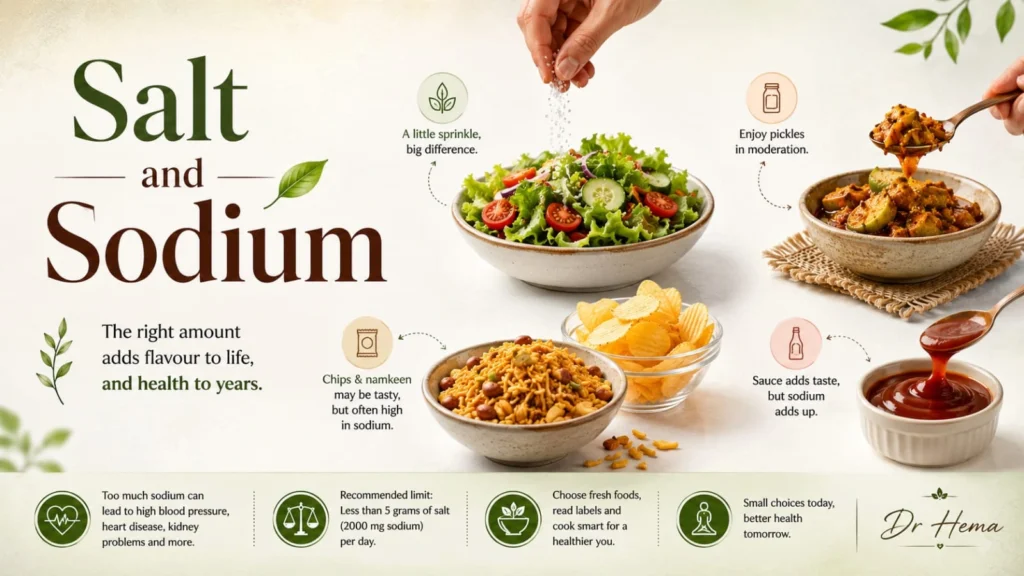
According to the World Health Organization (WHO), the global average sodium intake among adults was approximately 4,278 mg per day in 2021, equivalent to about 11 grams of salt daily. This is more than double the WHO recommendation of less than 2,000 mg of sodium (or less than 5 grams of salt) per day for adults.
Sodium is an essential nutrient required for maintaining fluid balance, transmitting nerve impulses, supporting muscle function, and regulating acid-base balance in the body.
Health Effects of Excess Sodium Intake
elevated blood pressure (hypertension).
Cardiovascular diseases
Stroke
Kidney disease
Gastric (stomach) cancer
Obesity
Osteoporosis
Meniere’s disease
In 2023, an estimated 1.7 million deaths worldwide were associated with excessive sodium consumption, highlighting the importance of reducing dietary sodium intake.
Sources of Sodium
Sodium and chloride together form common table salt. While sodium occurs naturally in foods such as milk, meat, and shellfish, a large proportion of dietary sodium comes from processed and packaged foods. Common sources include:
Bread and bakery products
Processed meats
Snack foods
Instant foods
Commercial sauces and dressings
Soy sauce and other condiments
Monosodium glutamate (MSG)
Practical Ways to Reduce Sodium Intake
Eat mostly fresh, minimally processed foods.
Remove the salt shaker from the dining table.
Cook with little or no added salt.
Use herbs and spices instead of salt for flavouring.
Choose lower-sodium or low-sodium food products.
Replace regular salt with lower-sodium potassium-containing substitutes.
Limit commercial sauces, dressings, and instant foods.
Reduce consumption of processed and packaged foods.
Public Health Importance
Reducing sodium intake is one of the most cost-effective strategies for preventing noncommunicable diseases. WHO recommends reformulating foods to contain less sodium, improving food labeling, promoting public awareness campaigns, and creating healthier food environments in schools, hospitals, workplaces, and other institutions.
Sodium–Salt Conversion
Understanding food labels can help individuals monitor their intake:
1 gram of salt = 400 mg of sodium
5 grams of salt = 2,000 mg of sodium
Homework
How to Calculate Your Daily Salt Intake
Most nutrition labels list sodium, not salt. To estimate your daily salt intake, first add up the sodium from all foods and drinks consumed during the day.
Convert Sodium to Salt
Use the following formula:
Salt (g) = Sodium (g) × 2.5
For example:
– 400 mg sodium = 0.4 g sodium
– 0.4 × 2.5 = 1 g salt
Quick Reference
– 400 mg sodium = 1 g salt
– 800 mg sodium = 2 g salt
– 1200 mg sodium = 3 g salt
– 2000 mg sodium = 5 g salt (WHO daily limit)
Estimating Salt in Home-Cooked Food
When food labels are unavailable, salt intake can be estimated from the amount of salt added during cooking.
– Dry foods and roasted dishes: about 1.5–2 g salt per 100 g food
– Soups and sauces: about 0.5 g salt per 100 g liquid
– Pasta cooking water: usually contains 1–2% salt
Remember Hidden Sources
A large portion of daily sodium comes from processed foods such as:
– Pickles and chutneys
– Namkeen and chips
– Bread and biscuits
– Instant noodles
– Sauces and dressings
– Restaurant and fast foods
WHO Recommendation
Adults should consume less than 2000 mg sodium per day, equivalent to less than 5 g salt (about one teaspoon).