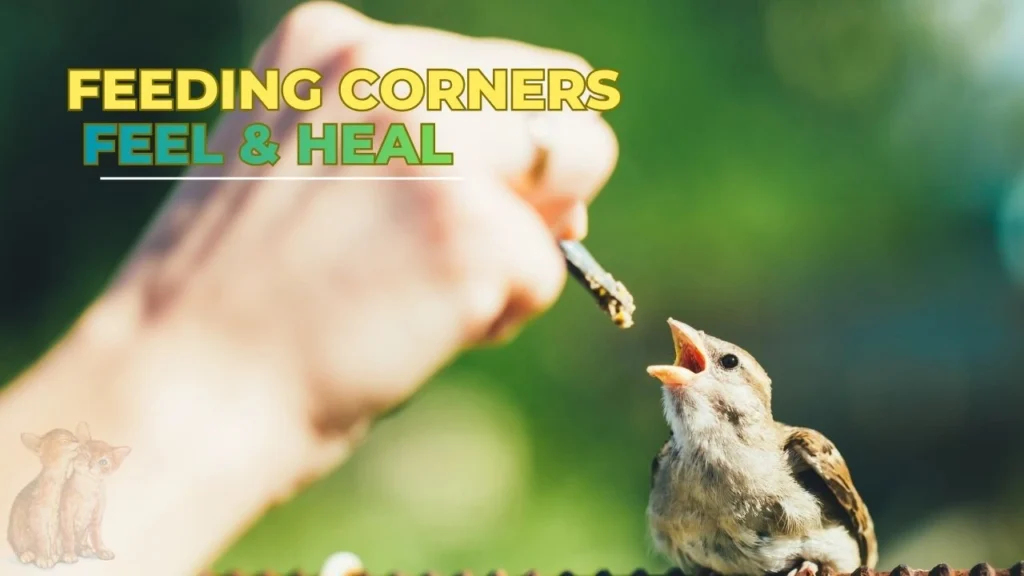
There is one activity I’ve come to trust deeply—something like a “raambaan.” It works, almost always. No matter what you are going through, what phase of life you are in, or what your age is—from chilly childhood to silly adulthood to wise second childhood—this one simple act has the power to lift your mood and gently touch your soul. That act is feeding. You don’t need a grand plan to begin. Just create small feeding corners—inside or outside your home or office. A bird feeder on the balcony, a tray filled with grains for squirrels and birds, a bowl of water placed quietly near a tree, or even a large pot set up for stray dogs and puppies. While traveling, you can carry a small bag of grains, bananas, or chana for monkeys and birds along the way. If you are visiting a pond, take some dough or bread for the fish. Your effort may feel like just 20%, but what you receive in return is something far beyond calculation—unconditional and unlimited love and joy.
These birds and animals don’t come to you only because you feed them; they come because they begin to feel safe and connected around you. Slowly, your world starts to change. Your mornings may begin with the soft—or sometimes loud—chatter of squirrels. Birds may come closer than you ever expected, perhaps even sit near you without fear. Dogs might wait for you and not let you leave without a moment of affection. There comes a time when feeding is no longer an act; it becomes a relationship. I remember a small story of a friend who began with just a handful of grains on her terrace every morning. For a few days, nothing happened. Then one pigeon came, then a few more, and soon they were waiting for her. She once shared that earlier she woke up with thoughts of stress, but now she wakes up thinking, “They must be waiting.” Her problems didn’t disappear overnight, but something within her softened. Her mornings became lighter, her heart a little more at ease. Sometimes healing does not arrive through big changes—it quietly grows through small, consistent acts of kindness.
Even science supports what the heart already feels. Acts of compassion are known to release oxytocin, serotonin, and dopamine, often called the “happy hormones,” which help in reducing stress and improving emotional well-being. That’s why our dog’s name is Happy. As Dalai Lama said, “If you want others to be happy, practice compassion. If you want to be happy, practice compassion.” At some point, you begin to realize that you are not just connecting with animals, but also reconnecting with a softer, quieter part of yourself—the part that gives without expectation. As Leo Tolstoy wrote, “Love is the only way to rescue humanity from all ills.” Maybe it begins with something as simple as feeding a bird.
Now pause for a moment and reflect. Where can you start—can you create one small feeding space near you? If you try this for a few days, what changes do you notice, not just outside but within yourself? When you feed, what do you feel first—joy, hesitation, peace? Can you continue this for a week or two ? And most importantly, are you only feeding others, or are you also nurturing something within yourself? Perhaps healing does not always need a big plan. Perhaps it begins with a small handful of grains and a willing heart.
“Love cures people—both the ones who give it and the ones who receive it.”