“Books are a uniquely portable magic.” — Stephen King
In a busy world, where time feels scarce and distractions are everywhere, one quiet habit can deeply shape your child’s future—reading together.
It doesn’t need hours.
Just 10–15 minutes a day can plant seeds of curiosity, imagination, and lifelong learning.
It Begins Even Before Birth
Research shows that by the third trimester, babies can hear and respond to sounds, especially their mother’s voice. Studies suggest newborns recognize familiar rhythms and tones they heard during pregnancy.
When you read aloud during pregnancy, you are not just passing time—you are:
Creating early sound memory
Building a sense of comfort and bonding
Laying the foundation for language development
The Power of Your Voice
After birth, your voice becomes your baby’s first teacher.
According to early childhood research:
By age 2, children can learn 250–350 words
By age 3, vocabulary can grow to 800–1,000 words
Children who are read to regularly hear millions more words by age 5 compared to those who aren’t
But it’s not just about words—it’s about connection.
When you read:
Your baby watches your face
Listens to your tone
Connects sounds with meaning
And slowly, language begins to make sense.
Make Stories Come Alive
Reading is not about finishing a book—it’s about feeling the story.
Try this:
Change your voice for each character
Make animal sounds
Use expressions and gestures
A simple story becomes a little theatre, and your child becomes part of it.
That’s where the magic lives.
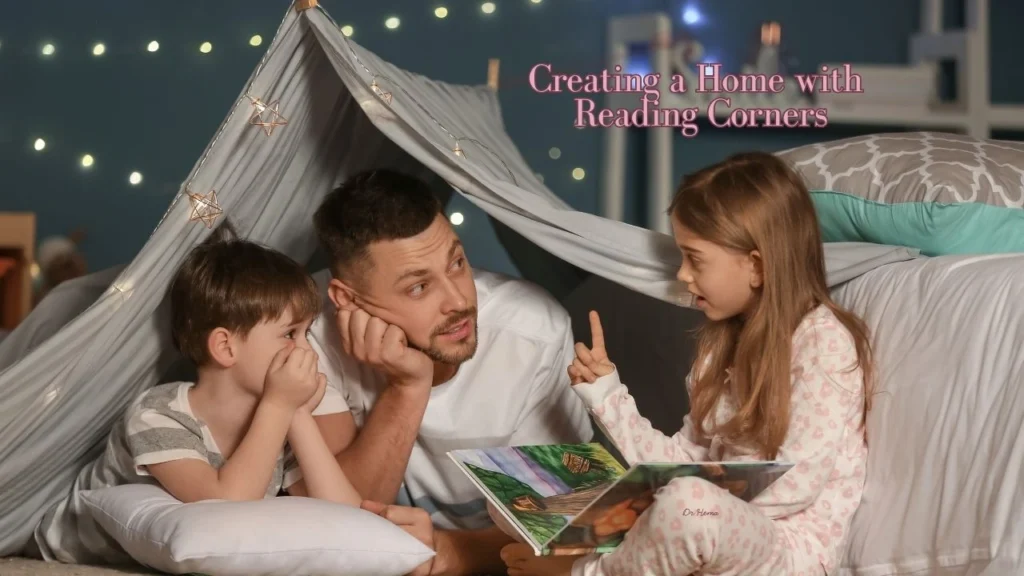
Whole family can participate in stories or drama.
Children Love Books Before They Can Read
Long before children learn letters, they learn how books feel.
You’ll notice:
Tiny hands turning pages
Pointing at pictures
Repeating favourite lines
These small moments are powerful. They build familiarity, joy, and emotional attachment to books.
Growing Together With Books
As your child grows, reading becomes a shared journey:
Start by reading aloud
Then ask them to point out letters or words
Take turns reading sentences, then pages
Ask questions like:
“What do you think will happen next?”
“Why did the elephant do that?”
This builds:
Thinking skills
Confidence
Expression
Follow Their Curiosity
If your child loves dinosaurs, cars, space, or animals—start there.
When reading connects to what they already love:
It feels natural
It feels exciting
It feels like their choice
Even comics or picture books count.
The goal is not “serious reading”—the goal is love for reading. slowly it will develop depth for content.
Create a Reading Environment at Home
You don’t need a big library.
Just:
Keep a few books within reach
Leave age related magazines or colourful materials around
Let your child see you reading
Children don’t just listen—they imitate.
Make Reading a Daily Ritual
Choose a time that works for your family:
Before bedtime
After dinner
During travel
Even 10 minutes daily can significantly improve:
Vocabulary
Attention span
School readiness
And more importantly—it builds memories.
Learning Happens Everywhere
Reading isn’t limited to books.
You can read:
Road signs
Food labels
Menus
Instructions
Even jokes at the dinner table
This shows children that reading is not a task—it’s a life skill.
A Gentle Reminder for Parents
Don’t worry if your child isn’t reading big authors yet.
What matters is:
They enjoy it
They look forward to it
They feel connected to you through it
Because in the end, reading is not just about knowledge.
It’s about bonding, imagination, and growing together.
Reading is a gift never make it a punishment.―
Milestones You May Notice
Every child is different, but generally:
Birth – 18 months
Recognises voices and sounds
Looks at pictures
Tries to turn pages
18 months – 3 years
Speaks hundreds of words
Enjoys repeated stories
Imitates sounds and phrases
3 – 5 years
Recognises letters
Uses full sentences
Understands stories read aloud
The Heart of It All
“Children are made readers on the laps of their parents.” — Emilie Buchwald
In the end, your presence matters more than the book.
A child who is held, heard, and read to…
doesn’t just learn to read—
they learn to love.