Music is Life. That’s why our hearts have beats. ~ Cecily Morgan
Children and teenagers are our hope—our heartbeat and our smile. They are the most alive beings among us. Yet, music has the power to make them even more alive. It flows like a gentle current through the wiring of the mind and body, awakening something deeper—something joyful, expressive, and complete.
As parents, we care deeply about our children, no matter their age. But an important question remains—how consciously and thoughtfully are we shaping their development? Some children are pushed into too many activities, constantly rushing from one class to another. Others are confined almost entirely to academics. Somewhere between these extremes lies balance, and music can quietly become that balancing force.
There is a beautiful wisdom in the Zimbabwean proverb: “If you can walk, you can dance. If you can talk, you can sing.” Music is not reserved for the gifted; it belongs to everyone. And when a child learns to play an instrument, they are not just learning notes—they are discovering a language of life.
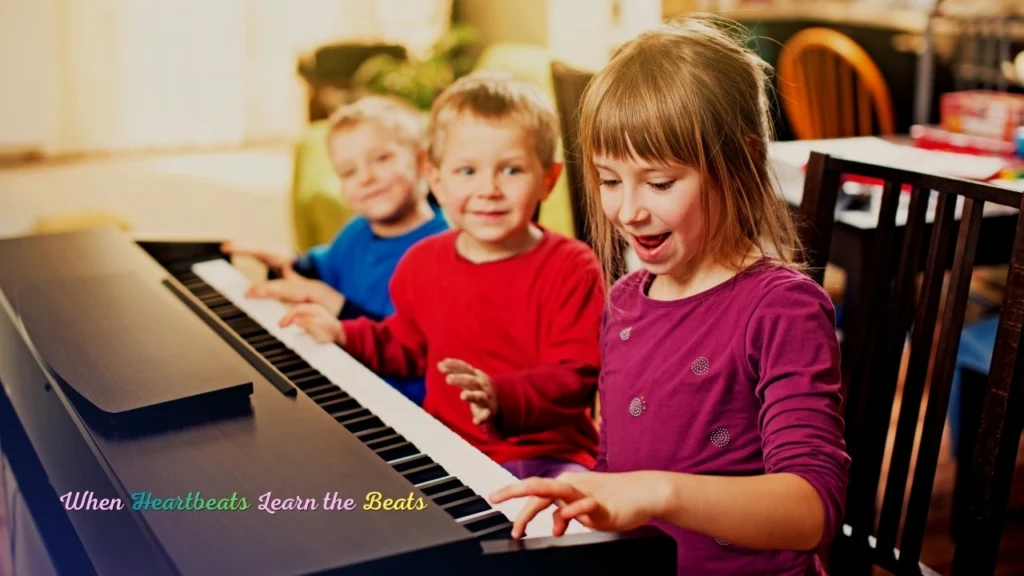
Learning an instrument adds a new dimension to a child’s personality. It gives them something that is entirely their own—a space where they can express, explore, and grow. Whether it becomes a lifelong passion or simply a comforting companion, music offers a meaningful alternative to the pressures of academic life. Instruments like the tabla, guitar, or harmonium gently shape a child’s sense of beauty, rhythm, and expression.
Beyond expression, music strengthens the mind in remarkable ways. Research has consistently shown that children who engage in musical training develop better memory and sharper cognitive abilities. The brain becomes more active and receptive, improving its ability to retain and process information. What begins as practice slowly transforms into mental strength.
At the same time, the physical coordination required to play an instrument builds agility and precision. The simple act of synchronizing hands, eyes, and rhythm enhances reflexes and coordination. These skills extend far beyond music, helping children in sports, studies, and everyday tasks.
But perhaps one of the most valuable lessons music teaches is patience. No instrument can be mastered overnight. Progress comes slowly, through repetition and persistence. In a world that often demands quick results, music teaches children to stay committed, to practice, and to trust the process. These qualities quietly shape their character and prepare them for life’s challenges.
Music also brings children together. When they play in groups, they learn to listen, to adjust, and to contribute. They understand that harmony is created not by one individual, but by collective effort. In this way, music nurtures teamwork and builds the foundation for strong social skills.
At a deeper level, music becomes a form of self-expression. Children who are connected to music often grow into individuals who are more confident and emotionally aware. They learn to express what they may not be able to put into words. This emotional openness fosters empathy, sensitivity, and humility—qualities that define a strong and compassionate human being.
“We, verily, have made music as a ladder for your souls, a means whereby they may he lifted up unto the realm on high . . .” – Bahá’u’lláh
Interestingly, music also strengthens analytical thinking. Rhythm, patterns, and timing are closely linked to mathematical concepts. Children who engage with music often develop a better understanding of numbers, logic, and structure. It is no coincidence that music has long been associated with intellectual growth and creativity.
At the same time, music connects children to their roots. Through traditional instruments and melodies, they gain an understanding of their culture and heritage. In a rapidly changing world, this connection provides a sense of identity and belonging, grounding them while allowing them to grow.
Scientific research further supports what we intuitively feel. Musical training, especially in early childhood, enhances brain development and leads to lasting cognitive benefits. It improves language skills, attention, memory, and even general intelligence. The brain adapts and grows through music, creating pathways that support learning in many areas of life. While starting early has its advantages, the beauty of music is that it welcomes learners at any age.
Of course, music is not without its challenges. Performing in front of others can bring nervousness or fear. But even this has its value. Children learn to face their anxieties, to manage stress, and to grow stronger through experience. With the right encouragement, these moments become stepping stones to confidence.
Music also holds special significance for children with unique needs. It can open doors where words cannot—improving communication, reducing anxiety, and helping them connect with others. Through rhythm and melody, they find a safe and joyful way to engage with the world.
In the end, learning an instrument is not about becoming a professional musician. It is about becoming a more complete human being. It offers discipline without pressure, creativity without limits, and joy without conditions.
As parents, we do not need to push our children into everything. Sometimes, one meaningful choice is enough. Giving a child the opportunity to learn and play an instrument is one such choice—simple, powerful, and lifelong in its impact.
Because music is not just something we hear.
It is something we live.
‘Abdu’l-Bahá asserts that “music, sung or played, is spiritual food for soul and heart.”