
We already have more than sufficient knowledge about stroke. So, why am I writing about it? To know something and to be able to apply that knowledge at the right time, when it is needed, are two very different things.
In 1999, when I was in the ninth grade, someone suggested that my father undergo surgery for external piles. The winter of that year changed the whole course of our lives. Surgery often seems like the easiest solution to get rid of a problem, sometimes without fully thinking about the possible consequences. After the surgery, my father’s rectal bleeding did not stop for the next five days, and he also suffered his first silent heart attack. That night, he lost consciousness, and I could not feel his pulse. It was December, a cold, foggy night. We did not have a telephone at home, and there were no Ola or Uber services. Even finding a rickshaw was difficult. My mother told me to go to the hospital while she stayed with Papa. I ran like a jaguar. The Community Health Centre (CHC), where the emergency services were available, was about 1.2 kilometres from our home. The doctor was very careful. I explained the entire history of the surgery, the persistent bleeding, and my father’s current condition. I was a good narrator even at that age. The doctor gave me some medicines and sent me back with a hospital vehicle so that I could return with Papa. Yes, we went back home, and he recovered after a few days. I still remember the doctor’s comment that we should not have opted for haemorrhoid surgery because its consequences would haunt my father throughout his life.
Well, in a way, that prediction seemed to come true. He developed hypertension, followed by a haemorrhagic stroke, then blockages in his arteries, and eventually bypass surgery. After that, he continued to suffer strokes. Initially, they occurred once every few years, then every six months, then monthly. Now, winter feels as though Holi has been celebrated inside his brain, with so many microhaemorrhagic spots appearing on his CT scans. Ulcerative colitis made everything even more difficult to manage because of the complexities and contradictions involved in treating different conditions, particularly in the presence of brain haemorrhages. Just when one emergency seemed to be settling down, another health problem would arise. When I became a homoeopathic physician, things became easy to handle these kinds of contractradictory situations. We had specific medicines for these kinds of combinations. But the point is that it was not only about the surgery. Genetics also played a role; my grandfather had also died following a stroke. Then there was tobacco, introduced as a remedy for toothache on a friend’s advice. Stress is something none of us can remain completely untouched by, and our love for ghee is something deeply rooted in our culture.
My education has truly paid off through the hundreds of stroke episodes we have managed at home over the years. The visits to hospitals, hospital stays, and the quality of our lives could have been entirely different. Today, I can no longer enjoy the beauty of winter without fear. Winter means living with the fear of losing my father.
But things could have been much worse. We could have lost him in 1999 itself. I might have grown up without a father and might never have become a doctor, because I became a doctor largely because of his dream.
That is why I feel it is almost mandatory for us to understand stroke, so that we can save lives—not only our own or those of our loved ones, but also the lives of people around us. Immediate action matters enormously in a stroke emergency. Let us learn about stroke, recognise its warning signs, and understand what to do when every minute counts.
A stroke is a medical emergency that occurs when the blood supply to the brain is interrupted, either because a blood vessel becomes blocked or because a blood vessel ruptures and causes bleeding in the brain. Without an adequate supply of oxygen and nutrients, brain cells begin to die within minutes. This can lead to permanent disability or death if treatment is delayed.
Recognizing the warning signs of a stroke and seeking immediate medical attention can save lives and reduce the risk of long-term complications. Effective medical treatment, timely rehabilitation, and appropriate preventive measures can significantly improve outcomes for people affected by stroke.
Understanding Stroke
The brain requires a continuous supply of oxygen and nutrients through the bloodstream to function properly. When blood flow is interrupted, the affected brain tissue can become damaged rapidly.
There are three important conditions to understand when discussing stroke.
-
Ischaemic Stroke
An ischaemic stroke occurs when a blood clot or another obstruction blocks a blood vessel supplying the brain. As a result, blood flow to part of the brain is reduced or completely stopped. This is the most common type of stroke.
The affected brain cells are deprived of oxygen and nutrients, which can cause them to die within minutes.
-
Haemorrhagic Stroke
A haemorrhagic stroke occurs when a blood vessel in the brain leaks or ruptures, causing bleeding in or around the brain. The accumulated blood increases pressure on surrounding brain tissue and damages brain cells.
This type of stroke requires immediate medical evaluation and treatment.
-
Transient Ischaemic Attack (TIA)
A transient ischaemic attack, or TIA, occurs when blood flow to the brain is temporarily interrupted, producing symptoms similar to those of a stroke.
The symptoms usually last only a few minutes and often resolve completely. A TIA generally does not cause the lasting brain damage associated with a completed stroke, but it is an important warning sign of a potentially serious future stroke.
Never ignore a suspected TIA, even when the symptoms disappear completely. Immediate medical assessment is necessary.
Stroke is one of the leading causes of death and disability worldwide. According to WHO estimates for 2021, approximately 11.9 million new cases occurred, and 93.8 million people were living with stroke. The lifetime risk has risen by 50% over the past two decades, with one in four adults expected to experience a stroke during their lifetime. These numbers remind us why awareness, prevention, and immediate medical action matter so much.
Recognizing the Symptoms of Stroke
Stroke symptoms often develop suddenly. They can vary depending on which part of the brain is affected, but several warning signs require immediate attention.
-
Facial Drooping
One side of the face may become weak or numb. When the person tries to smile, one side of the mouth may droop.
-
Weakness or Numbness in the Arms or Legs
A person may experience sudden weakness, numbness, or paralysis in the face, arm, or leg. These symptoms commonly affect one side of the body, although other patterns can occur.
When asked to raise both arms, the person may be unable to lift one arm properly, or one arm may drift downward.
-
Difficulty Speaking or Understanding Speech
A person having a stroke may suddenly find it difficult to speak clearly or understand what others are saying. Speech may become slurred, words may be difficult to find, or the person may appear confused.
-
Sudden Vision Problems
Stroke may cause blurred vision, double vision, or partial or complete loss of vision in one or both eyes.
-
Sudden Dizziness or Difficulty Walking
A person may experience sudden dizziness, loss of balance, difficulty coordinating movements, or trouble walking. They may stumble or become unable to maintain their balance.
-
Sudden, Severe Headache
A sudden, unusually severe headache can be a warning sign, particularly in a haemorrhagic stroke. It may occur with vomiting, dizziness, or changes in consciousness.
Not every stroke causes a headache, and a headache alone does not necessarily indicate a stroke. However, a sudden severe headache, especially with other neurological symptoms, requires emergency assessment.
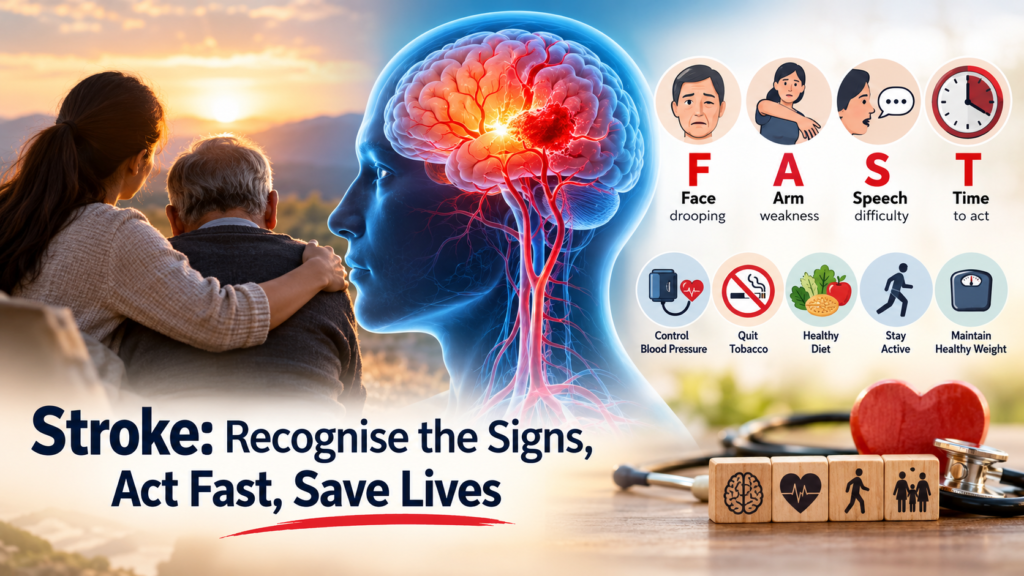
Remember B.E. F.A.S.T.
The B.E. F.A.S.T. approach can help people recognize common stroke warning signs.
– B – Balance: Is there sudden dizziness, loss of balance, or difficulty coordinating movements?
– E – Eyes: Is there sudden loss of vision or a new visual disturbance?
– F – Face: Does one side of the face droop when the person smiles?
– A – Arms: Is one arm weak or drifting downward?
– S – Speech: Is the speech slurred, unusual, or difficult to understand?
– T – Time: If any of these signs appear suddenly, seek emergency medical help immediately.
Symptoms can sometimes disappear after a short period. This does not mean that the person is safe or that medical assessment is unnecessary.
What to Do If Someone May Be Having a Stroke
Every minute matters during a stroke. The longer the brain remains without adequate blood flow, the greater the risk of brain damage and disability.
If you suspect a stroke:
- Call emergency medical services immediately. In India, you can call 108 for emergency assistance. Or personal contact with nearby hospitals. Do not wait for symptoms to improve.
- Note the time symptoms began. If the exact onset time is unknown, note when the person was last seen well. This information helps doctors determine which treatments may be appropriate.
- Stay with the person and observe their condition. Watch for changes in consciousness, breathing, speech, or movement.
- Do not give food, water, or oral medicines. Stroke can affect swallowing, increasing the risk of choking or aspiration.
- Do not give aspirin on your own. A stroke may be caused by bleeding rather than a clot, and aspirin can worsen bleeding.
- Follow the emergency responder’s instructions. If the person becomes unconscious or is not breathing normally, follow emergency guidance for resuscitation and airway management.
Do not delay seeking help to perform repeated tests or wait to see whether symptoms resolve.
Diagnosis of Stroke
A suspected stroke requires immediate medical evaluation. The goal is to identify the type of stroke, determine which part of the brain is affected, and begin the most appropriate treatment without unnecessary delay.
-
Clinical Assessment
Doctors assess the onset and nature of symptoms, medical history, medications, blood pressure, blood glucose, and neurological function.
They may evaluate speech, vision, facial movement, limb strength, coordination, and consciousness.
-
Brain Imaging
Urgent brain imaging is essential.
– CT scan: A non-contrast CT scan is commonly performed quickly to identify bleeding in the brain and help guide treatment.
– MRI scan: MRI can provide detailed information about brain tissue damage and may help identify certain strokes, depending on the clinical situation and availability.
Imaging helps distinguish between ischaemic and haemorrhagic stroke, which is crucial because their treatments differ.
-
Additional Investigations
Depending on the patient’s condition, doctors may perform blood tests, an electrocardiogram (ECG), vascular imaging, and other investigations to assess blood glucose, clotting, cholesterol, heart rhythm, and the condition of blood vessels.
These tests can help identify the cause of the stroke and guide treatment and future prevention.
Treatment of Stroke
Stroke treatment depends on the type of stroke, the severity of symptoms, the location of the affected blood vessel, and the time elapsed since symptoms began. NOT going to mention medicines name.
Management may include:
– Careful blood pressure control.
– Reversal of anticoagulant medicines when indicated.
– Intensive monitoring in a specialized stroke unit or intensive care unit.
– Management of increased pressure within the skull and other complications.
– Neurosurgical or endovascular intervention when appropriate.
The choice of treatment depends on the location and extent of bleeding, the patient’s condition, and the underlying cause.
Homoeopathic Help
In our family, homoeopathic medicines have been part of managing acute episodes and chronic conditions, as well as supporting recovery. We have witnessed the restoration of vision and speech after a stroke, the ability to walk again, and even people returning to work after quadriplegia. However, immediate medical action was also taken alongside the medicines, and hospitalisation was arranged whenever needed.
As a physician, I want you to learn about stroke, especially if you have hypertension or a family history of the disease. Keep the contact details of a homoeopathic physician who can be reached promptly during an emergency. However, never delay calling emergency services or reaching a hospital to contact a physician or administer homoeopathic medicines available at home, even with a doctor’s guidance. Immediate, evidence-based medical treatment is essential to save lives and reduce brain damage.
After hospital admission, if you wish to continue homoeopathic medicines alongside conventional treatment, consult both physicians and inform them about all the medicines being used.
I have many friends and colleagues from other systems of medicine, including allopathy and Ayurveda, who have received my help during stroke emergencies while also receiving their own medical treatment. They have subsequently regained speech, walking ability, or vision. These are our experiences, and recovery can vary from person to person.
The first step towards preparedness is to keep a homoeopathic medicine kit at home, have a homoeopathic physician’s contact details readily available for consultation, and, most importantly, know the immediate actions required when a stroke occurs. Remember that a home medicine kit must never replace or delay emergency stroke treatment.
The Importance of Specialist Stroke Care
Admission to a specialized stroke unit improves the coordination of medical care, monitoring, prevention of complications, and rehabilitation planning. Organized stroke-unit care is associated with better outcomes and reduced mortality and disability.
Stroke Risk Factors and Prevention: What Can We Change?
Stroke does not always occur because of one particular reason. Family history, existing medical conditions, lifestyle, and environmental factors can all contribute. Some risks cannot be changed, but many can be controlled through awareness, healthy habits, and appropriate medical care.
Important risk factors include:
– High blood pressure: One of the leading risk factors for both ischaemic and haemorrhagic stroke. Regular monitoring and proper treatment are essential, even when there are no symptoms.
– Tobacco use: Smoking and other forms of tobacco increase vascular risk; second-hand smoke is also harmful.
– High cholesterol and diabetes: Elevated LDL cholesterol and uncontrolled blood glucose can damage blood vessels and increase stroke risk.
– Overweight, physical inactivity and unhealthy diet: Excess body weight, too little exercise, high salt intake, and insufficient fruits and vegetables contribute to cardiovascular risk.
– Alcohol and illicit drugs: Harmful alcohol consumption and drugs such as cocaine can increase the risk of stroke.
– Air pollution and kidney disease: Both are associated with increased cardiovascular risk.
– Age, previous stroke and heart conditions: Risk generally increases with age. A previous stroke raises the likelihood of another, while conditions such as atrial fibrillation can cause blood clots to travel to the brain. Chronic kidney disease is also an important associated risk factor.
What Can We Do to Reduce the Risk?
Many strokes may be prevented by addressing these risk factors. We can start with simple but consistent steps:
– Monitor blood pressure regularly and take prescribed medicines as advised.
– Avoid tobacco in all forms and harmful alcohol consumption.
– Eat a balanced diet rich in fruits, vegetables, whole grains and pulses. Limit excessive salt, saturated fats and added sugars.
– Aim for at least 150 minutes of moderate-intensity physical activity each week, according to your health and fitness.
– Maintain a healthy weight and manage diabetes and cholesterol.
– Reduce exposure to air pollution where possible.
– Seek appropriate assessment and treatment for heart conditions, particularly atrial fibrillation.
People at increased risk may need additional preventive measures, such as statins, antiplatelet medicines, anticoagulants, or assessment for narrowing of the carotid arteries. Selected patients may benefit from procedures to restore blood flow through these arteries. Such decisions must be individualised by a doctor; antiplatelet medicines and anticoagulants are different, and neither should be started without medical advice.
Age and family history are beyond our control, but their presence makes the management of modifiable risks even more important.
Stroke affects more than survival; it can change a person’s mobility, memory, independence, emotional well-being, and overall quality of life, often affecting the entire family.
We cannot control every risk, but we can take informed steps to reduce the chances of stroke and be better prepared to respond when an emergency occurs.
Complications of Stroke
Stroke can affect movement, speech, memory, emotions, swallowing, and the ability to perform everyday activities. Complications vary according to the area and extent of brain damage, the severity of the stroke, and the timeliness of treatment.
Acute Complications: Days to Weeks
Possible early complications include:
– Brain oedema: Swelling of the brain that may increase pressure inside the skull.
– Aphasia and other speech disorders: Difficulty speaking, understanding language, reading, or writing.
– Dysphagia: Difficulty swallowing, which can increase the risk of choking and aspiration.
– Aspiration pneumonia: A lung infection that can occur when food, liquid, or secretions enter the lungs.
– Seizures: Abnormal electrical activity in the brain.
– Depression: Emotional and psychological difficulties following stroke.
– Pressure ulcers: Skin damage caused by prolonged pressure, especially in people with limited mobility.
– Limb contractures: Tightening of muscles and soft tissues that restricts joint movement.
– Spasticity: Increased muscle tone and stiffness that can interfere with movement.
– Shoulder pain: Pain that may develop due to weakness, altered movement, or problems supporting the affected arm.
– Deep vein thrombosis: Formation of blood clots in the deep veins, particularly in the legs, which may be associated with prolonged immobility.
Early recognition and appropriate management of these complications are important parts of stroke care.
Long-term Complications: Months to Years
Some people experience persistent difficulties, including:
– Weakness, paralysis, or reduced movement.
– Difficulty walking and maintaining balance.
– Chronic pain and muscle spasticity.
– Cognitive impairment, including memory loss and difficulties with attention or problem-solving.
– Emotional and psychological problems, including depression and anxiety.
– Post-stroke epilepsy in some individuals.
– Urinary incontinence.
– Reduced independence and difficulty performing daily activities such as bathing, dressing, cooking, and managing household responsibilities.
The nature and severity of these problems vary. With appropriate treatment, rehabilitation, and support, many people can improve their function and quality of life.
Rehabilitation After Stroke
Rehabilitation is a vital part of stroke recovery. Its purpose is to help individuals regain lost abilities, adapt to any lasting limitations, improve their quality of life, and achieve the greatest possible level of independence.
Rehabilitation should begin as soon as the person is medically stable, often within the first few days after a stroke when clinically appropriate. The timing and intensity of therapy must be tailored to the person’s condition and tolerance.
A multidisciplinary team may include doctors, nurses, physiotherapists, occupational therapists, speech and language therapists, psychologists, and other rehabilitation professionals.
- Physiotherapy
Physiotherapy helps improve muscle strength, mobility, balance, coordination, and walking ability. It may include guided exercises, movement training, balance activities, and strategies to improve safe mobility.
2. Occupational Therapy
Occupational therapy focuses on helping individuals regain the ability to perform everyday tasks, including bathing, dressing, eating, cooking, and other personal or household activities.
Therapists may recommend adaptive equipment and changes to the home environment to improve safety and independence.
3. Speech and Language Therapy
Speech and language therapists help people with difficulties in speaking, understanding language, reading, writing, and swallowing.
For people with dysphagia, they may recommend appropriate swallowing assessments and individualized strategies to reduce the risk of choking and aspiration.
4. Cognitive and Neuropsychological Rehabilitation
Stroke can affect attention, memory, planning, problem-solving, and other cognitive abilities. Cognitive rehabilitation aims to improve these functions or help individuals develop practical strategies to manage ongoing difficulties.
5. Psychological Support and Counselling
Stroke can be emotionally challenging for both the individual and their family. Depression, anxiety, frustration, fear, and changes in self-confidence may occur during recovery.
Psychological support and counselling can help individuals adjust to these changes, manage emotional difficulties, and participate more effectively in rehabilitation.
6. Family Involvement and Long-term Support
Family members and caregivers play an important role in recovery. They can support therapy exercises as advised by professionals, encourage safe daily activities, help maintain follow-up appointments, and provide emotional support.
Caregivers should also receive guidance about safe transfers, feeding precautions, medication routines, and the prevention of falls and pressure injuries.
Recovery varies from person to person. Some individuals regain many of their previous abilities, while others need continuing assistance. Regular reassessment and an individualized rehabilitation plan can help address changing needs over time.
Take care…