During my medical college years, I found recognising chest sounds very difficult. Although my duties at Balrampur Hospital, Lucknow, from the second year onwards were extremely helpful, the hospital was always crowded. The general physicians and chest specialists tried their best to teach me, but grasping things within seconds of listening to chest sounds through a stethoscope was not easy.

In hospitals, teachers, professors, and doctors put so much effort into helping learners. Throughout my student life, I received plenty of help and special attention from my teachers and mentors, probably more than I deserved. I am still grateful for all of it.
One day, the doctor under whom I was working during my morning duty suggested, “Why don’t you take evening duty in the Intensive Cardiac Care Unit? Unlike the OPD, there won’t be such a rush. You will have more time with individual patients. Their reports will be available, their family members will be around, and you can observe the patients, listen to their heart and lung sounds, correlate the signs and symptoms, and learn. You can also ask questions during the evening rounds.”
It was our winter break, so I started doing morning OPD duty and evening ICCU duty. The nursing staff in the ICCU were very humble and cooperative. The head nurse even guided me towards patients who were comfortable sharing their medical histories and allowing me to examine them repeatedly. That was where I started.
I used to carry three or four books with me. Remember, this was before smartphones! Later, the cardiologist allowed me access to the hospital library, so I could pick up a book when I entered the hospital and return it before leaving. Those were specialised, heavy books, not something easy to carry around all day.
On my first evening, I could analyse only one case during six hours of duty. The next day, I managed one old case and one new case. Slowly, I started finding my rhythm. I wanted to read all my books simultaneously, so one of the staff nurses kindly allowed me to use their changing room as a study space. There was even a bed where I could sit and study between duties.
During the evening rounds, Incharge Doctors would ask me difficult questions about the patients. Honestly, it almost felt as if I knew nothing at all. Every day, I would discover something new that I didn’t know, and every night, I would go back to my books.
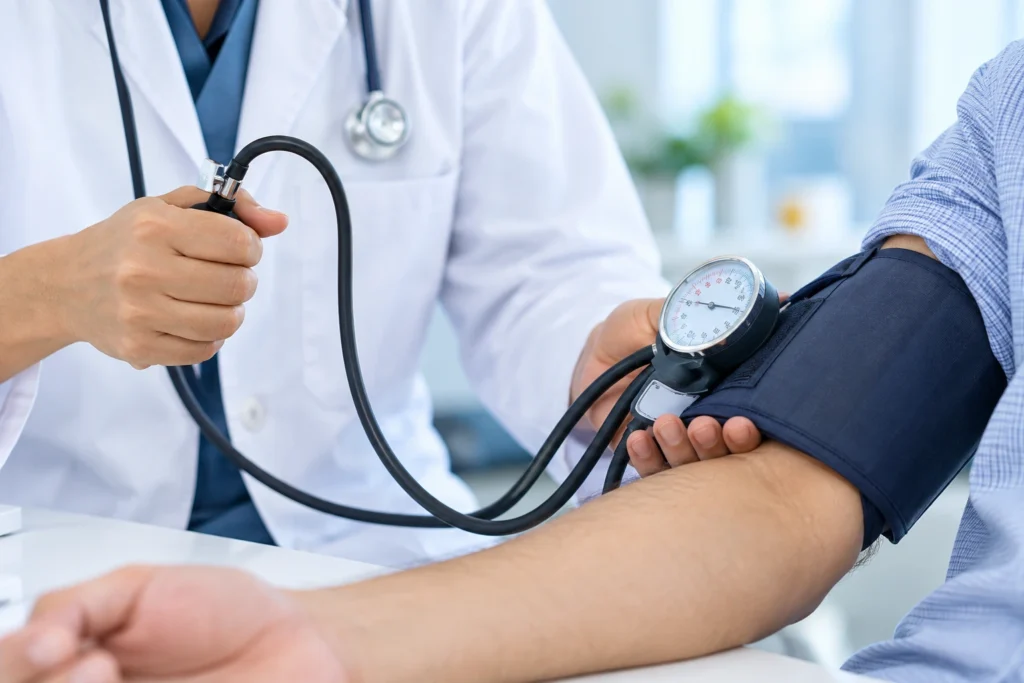
One day, during my OPD duty, my sir, the general physician, called me from behind while I was taking a patient’s history. He asked me to check the patient’s blood pressure again. I had recorded it as 120/60 mmHg. He then asked me to repeat the measurement and raise the pressure above 200 mmHg. I was confused, but I checked again. This time, I observed readings around 200/140 mmHg, followed by a sudden change and then a reading of 120/60 mmHg. Two blood pressures in one patient at a time!
He asked me, “What is this?”
I had no idea.
“Read about it tonight and tell me tomorrow,” he said.
Well, you can imagine the amount of studying and effort that night! Even after all that reading, I could come up with six or seven possible explanations, but I couldn’t arrive at a final diagnosis.
During the next IPD round, he explained the case as we moved from one patient to another. At the bedside, he showed me how the patient’s signs and symptoms fitted together and how clinical findings could point towards a diagnosis. Suddenly, the things I had been reading in textbooks began to make sense in front of me.
I won’t mention the final diagnosis here. Some homework you have to do yourself!
For the next fifteen days, he asked me to study congestive heart failure in greater depth. He wanted me to learn how to recognise the clinical clues even before patients had described all their complaints. Swelling of the feet, breathlessness, puffiness around the eyes, pallor, the appearance of the eyes and skin, and the investigation reports—all these could provide important clues. I had to learn to observe, form a preliminary clinical impression, and then confirm it by correlating my findings with the patient’s history, symptoms, and examination.
Initially, it was very difficult. Slowly, though, I began finding my rhythm.
One day in the OPD, a man who looked to be around sixty was standing nearby. He coughed a few times and sighed intermittently. My sir called me from behind and asked me to take his case and report back.
After about fifteen minutes, I returned and presented the complete case. He listened to me carefully and, at the end, asked me to admit the patient to the surgical ward. He had already arranged for a procedure to drain the fluid from the patient’s chest.
Oh, how I wanted to become as good as my senior! From a distance, he had noticed the patient’s cough and appearance and recognised that something important was going on. Of course, his clinical judgement was the result of years of experience and the ability to connect small clues with the bigger picture. But watching him work made me realise how much there was to learn beyond textbooks.
And most importantly, there was his desire to serve. His hours and efforts were not limited by his job description. He tried to attend to all his IPD and OPD patients, sometimes more than 200 in a day. He would also receive numerous calls from other departments to help confirm diagnoses in complicated cases.
And I never heard him complain—not in words, not even through his expressions. He simply ran around the whole hospital, always happy to help.
I still remember another incident from my medical student days. For the first time, I had to go to another hall and declare someone dead. The person had already been brought out of the emergency ward and shifted to that hall. I examined the patient nearly twenty times, going through all the textbook instructions for declaring someone dead. But I was extremely nervous.
The nurse sent someone to my sir and said that the new student was unable to make the declaration. What should they do?
My sir came running. He quickly went through the essential steps with me, checking the heart, lungs, brain functions, and other signs before guiding me through the process of certifying the death.
He didn’t say a single word about how badly I had struggled. Instead, he shared some of his own stories of failure from different stages of his career and told me that a certain amount of nervousness helps us grow.
Even today, I cannot express even a fraction of the gratitude I feel for all the learning. You might be thinking that, after sixteen years of practice, I must have become as good as the doctor I once admired so much. Well, I wish I could say that! The truth is, sometimes I feel I am slowly losing some of the capacities I worked so hard to develop. The daily demands of work, the limitations of the structures we work within, the challenges of middle age, and the constant chaos of the world around us can all affect our focus. We become so occupied with managing everything that we sometimes forget to nurture the very skills and interests that once meant so much to us.
Yesterday, I was upset about all these things. But this morning, I found myself thinking about where I came from. I have been raised by these very government institutions. My father was a government schoolteacher, and I studied in government schools. I received my medical education at a government medical college in Lucknow, and government district hospitals gave me opportunities to learn through clinical duties, training, and internships. So many teachers, professors, doctors, nurses, and other people along the way contributed to the person and doctor I am today. When I look back, I realise just how much I have received from them.
Now, here I am, serving as a government doctor myself, and I find myself wondering: why do I sometimes struggle to focus on what I can do with what I have, right where I am? Why let the limitations around me overshadow the opportunities, experiences, and knowledge I have gathered over the years?
Perhaps I cannot change everything around me, but I can still decide what I do with what I have, where I am, and in the role I hold today.